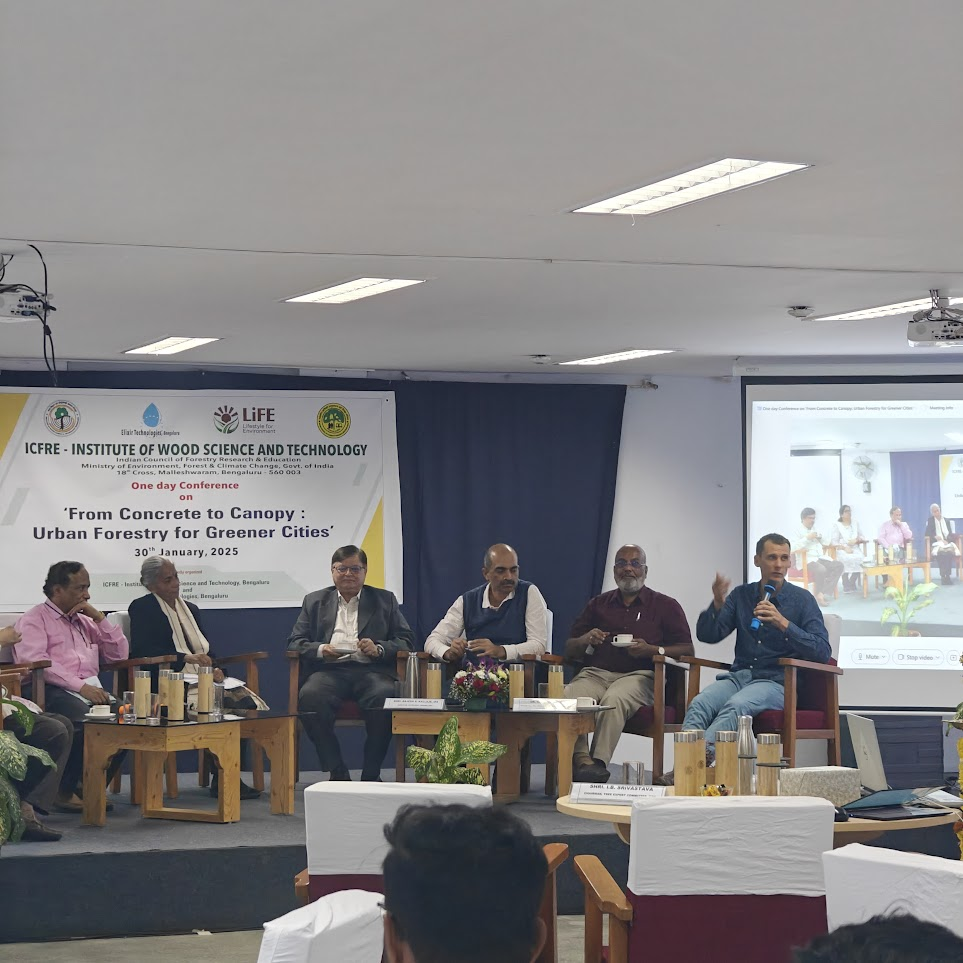

Can you introduce yourself in your role in urban arboriculture in India?
I’m an urban tree consultant or consulting arborist working mainly with mature trees
in Indian cities. My journey started over 20 years ago in Auroville, where I worked on
a reforestation project and experimented with pruning pioneer species to improve
timber value to fund further planting and management. That led me to learn pruning
from a Spanish arborist in Auroville and to cofound a tree surgery unit, Tree Care,
which still operates today under collaborators.
To deepen my expertise, I worked in Australia and the UK, gaining my ISA arborist
certification, hands-on climbing and pruning experience, and then moving into tree
surveying and assessments, and reporting. When I returned to India, I founded
Treescapes, which focuses on professional tree management for mature trees in
urban environments. We assess trees for risk and condition, recommend and
oversee pruning and other interventions.
We also work on development projects to decide which trees to retain, protect, or
remove based on species, health, structure, remaining life, and suitability to the site.
This is done in collaboration with architects, landscape architects, engineers, and
contractors.
We also prepare method statements and technical guidance for planting and
transplanting, working with partners across India to implement them.
To build capacity in India, I’ve also created arboriculture courses—online via Udemy,
in-person workshops, and I am now creating a university-credit program—that
professionals like landscape architects and engineers can integrate into their work.
This helps bridge the skills gap while we handle complex projects.
The overall focus on mature trees is deliberate: they provide far greater ecological
and social benefits than newly planted trees, so preserving them is often far more
effective than simply planting more.
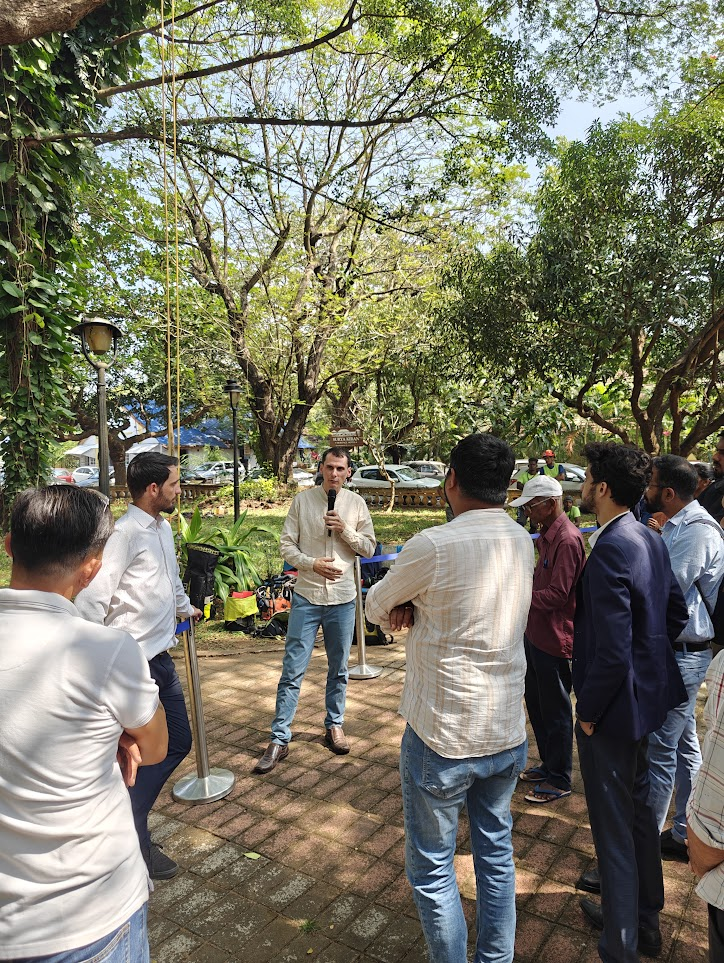
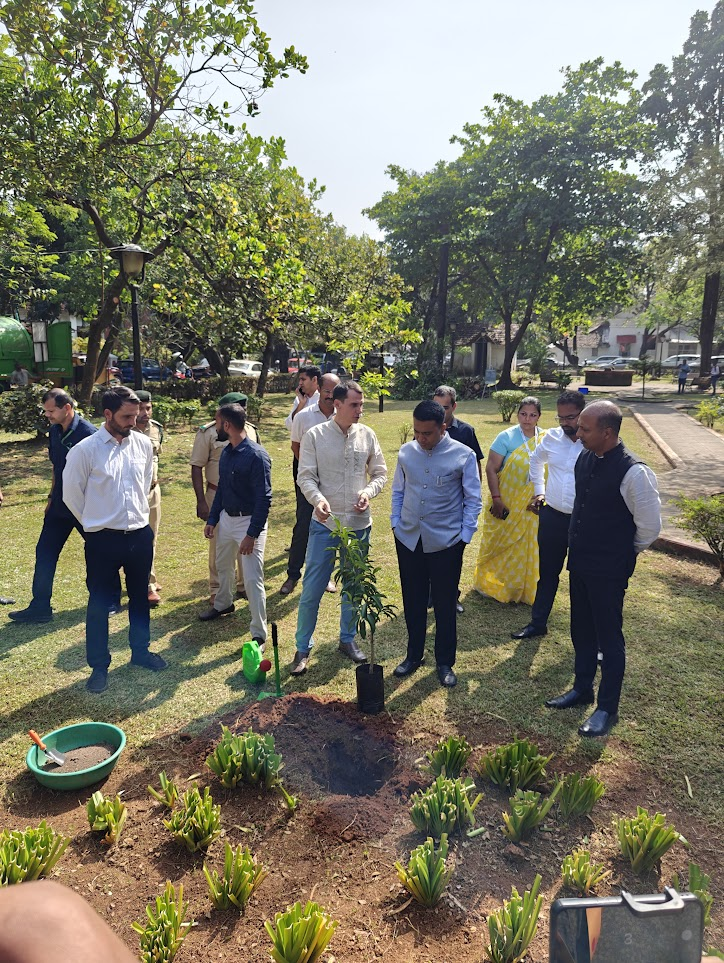
What challenges do you face providing this service in India?
One of the main challenges is that urban trees are still not valued as critical
infrastructure, so budgets for their management are very limited. As a result, most
pruning and removal work is done by workers who are not trained in arboriculture,
using chainsaws and hand tools without any systematic assessment or
understanding of tree biology. This leads to unhealthy, structurally weak trees and a
very reactive system, where interventions only happen after a problem or a failure.
Professional tree management does cost more per intervention, but it extends tree
life, reduces failure risk, and lowers longterm costs associated with repeated
removals and replanting. My work is often with clients who already have the
resources and the mindset to invest in proper tree care, because there are currently
no legal requirements or standards that mandate professional arboricultural input in
most Indian cities.
What can most easily be changed to improve tree management in India?
The easiest starting point is basic training in tree inspection and standard pruning
practices, supported by simple, consistent guidelines. These skills take time to build,
so training needs to start now, and it should emphasise both risk and tree retention
so that new inspectors do not feel forced to condemn every tree they see with a
defect (which can be a common result).
The second area is development near mature trees. Most construction
unintentionally damages root systems by excavation, compaction, or raising soil
levels around the trunk, and the tree may only die several years later, so the link is
rarely made. We need to correct common myths, such as the idea that roots mirror
the canopy in depth, when in reality most structural and absorbing roots are relatively
shallow and extend well beyond the canopy, and to introduce simple protection
measures on construction sites. Clear information and enforceable guidelines for
development could prevent a large proportion of avoidable tree losses in Indian
cities.
Which sector do you think needs to lead the way in tree management in India?
I believe municipal corporations should lead on urban tree management, because
they are responsible for most public trees and for setting standards. In practice, I
have often found smaller institutions more responsive and easier to work with so far,
but that can change as cities recognise the value of professional arboriculture.
New policies are essential to accelerate this. In Maharashtra, for example, some
government and municipal tenders that involve tree management now explicitly
require a qualified arborist or tree expert on the team, which is a very positive step
towards embedding professional standards in public projects.
Do you think India is ready for professional tree management at this time?
Yes, I think India is ready. There is budget, there are people with relevant skills, and
there is increasing pressure from climate commitments, extreme weather, and public
safety to manage trees better in cities. The real question is how to start and scale,
not whether the country is ready.
Many professionals are already close to this work – landscape architects, civil
engineers, horticulturists, environmental consultants – and only need targeted
training in arboriculture to bridge the gap. If we can integrate basic tree risk assessment
and tree protection into existing planning and infrastructure processes,
professional tree management can grow quite quickly.
Do you think the current efforts in planting drives are what will benefit India?
Tree planting drives are important, but they are not enough on their own. Planting is
only the first step; what really matters is whether those trees are established, cared
for, and allowed to reach maturity. At the moment, many largescale drives focus on
numbers planted rather than survival, species suitability, or longterm maintenance.
My focus on mature trees in the urban forest comes from a belief that people need to
experience the real, tangible benefits of trees – shade, microclimate, biodiversity,
beauty – close to where they live and work. Large planting programmes often
happen without local ownership, so their success is limited. If people grow up around
wellmanaged trees in their neighbourhoods, they are more likely to value both urban
green spaces and larger wild forests, and to support the policies needed to protect
them.