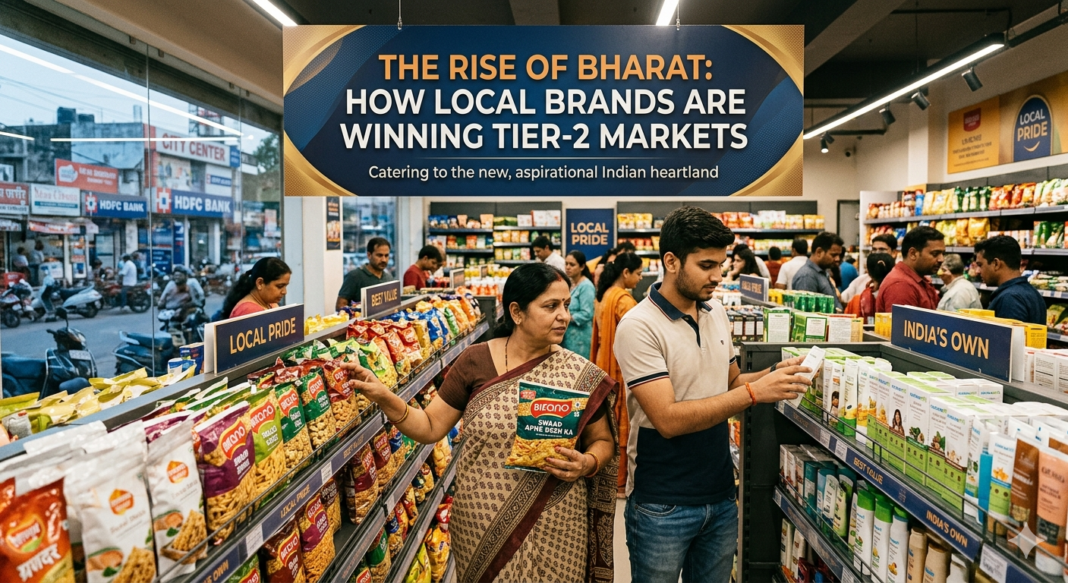

India’s growth story is no longer confined to metropolitan hubs like Mumbai, Delhi, or Bengaluru. A powerful and transformative shift is now unfolding across Tier-2 cities such as Lucknow, Indore, Surat, Jaipur, and Varanasi, where the real momentum of economic and consumer growth is taking shape. At the heart of this evolution are local brands—homegrown businesses that are not just competing with national and global players, but increasingly outperforming them across multiple sectors.
This rise is fueled by a massive and rapidly expanding consumer base in Tier-2 and Tier-3 cities, which now account for over 53% of India’s urban population. With improving income levels, better education, and rising aspirations, consumers in these regions are highly brand-aware, digitally connected, and value-conscious. This is no longer an emerging market—it is India’s new mainstream.
The digital revolution has further accelerated this shift. Affordable internet and widespread smartphone usage have eliminated the traditional advantages of metro cities. Today, trends spread instantly through social media, e-commerce platforms ensure nationwide access, and digital payments have simplified transactions. Consumers in smaller cities now expect the same quality, design, and experience as those in metros, allowing local brands to compete on an equal footing without needing a big-city presence.
One of the strongest advantages local brands hold is their deep emotional and cultural connection with consumers. They understand regional languages, traditions, and buying behaviors, especially during festivals and local events. This relatability builds trust and loyalty, something that large brands often struggle to replicate. In fact, regional language engagement significantly boosts customer interaction, giving local businesses a decisive edge.
Moreover, local brands have mastered the balance between value and quality. Unlike metro markets where brand premium often drives pricing, consumers in Tier-2 cities prioritize affordability, functionality, and reliability. By optimizing supply chains, minimizing overhead costs, and avoiding excessive branding expenses, local brands deliver high-quality products at competitive prices.
From a business perspective, Tier-2 cities also offer faster growth opportunities and lower operational costs. Reduced rents, affordable marketing, and relatively lower competition create an ideal environment for expansion. Sectors such as restaurants, FMCG, and fashion are witnessing rapid growth, supported by increasing retail demand—evident in categories like jewellery, watches, and grocery.
Another defining factor is the rise of a new generation of entrepreneurs—often referred to as “Bharat Founders.” These individuals bring a deep understanding of local markets, build lean and sustainable business models, and seamlessly blend traditional values with modern branding strategies. They are not just small players anymore; they are shaping the future of India’s business landscape.
E-commerce has further strengthened this ecosystem. While a significant portion of demand for international brands is now coming from Tier-2 and Tier-3 cities, local brands continue to dominate through strong offline presence and emotional loyalty. This has created a hybrid consumption model where digital access meets local trust, giving regional brands a powerful advantage in repeat purchases and customer retention.
What truly sets local brands apart is their hyperlocal understanding. Unlike large corporations that rely on standardized products and centralized strategies, local businesses are agile, adaptive, and deeply connected to their communities. They customize offerings, respond quickly to changing preferences, and build strong grassroots distribution networks. In this evolving market, relevance consistently outperforms reputation.
Looking ahead, the vision of “Vocal for Local” is steadily becoming a reality. Consumption patterns are shifting beyond metros, aspirations are rising in smaller cities, and local brands are expanding nationally. The next wave of successful startups and even unicorns may very well emerge from cities like Kanpur, Lucknow, Indore, and Coimbatore.
In conclusion, Tier-2 cities are no longer just growth markets—they are becoming decision markets that will define India’s future consumption landscape. In this new era, the true winners will not necessarily be the biggest brands, but those that stay closest to their customers. And in that regard, local brands hold the ultimate advantage—they understand Bharat better than anyone else.