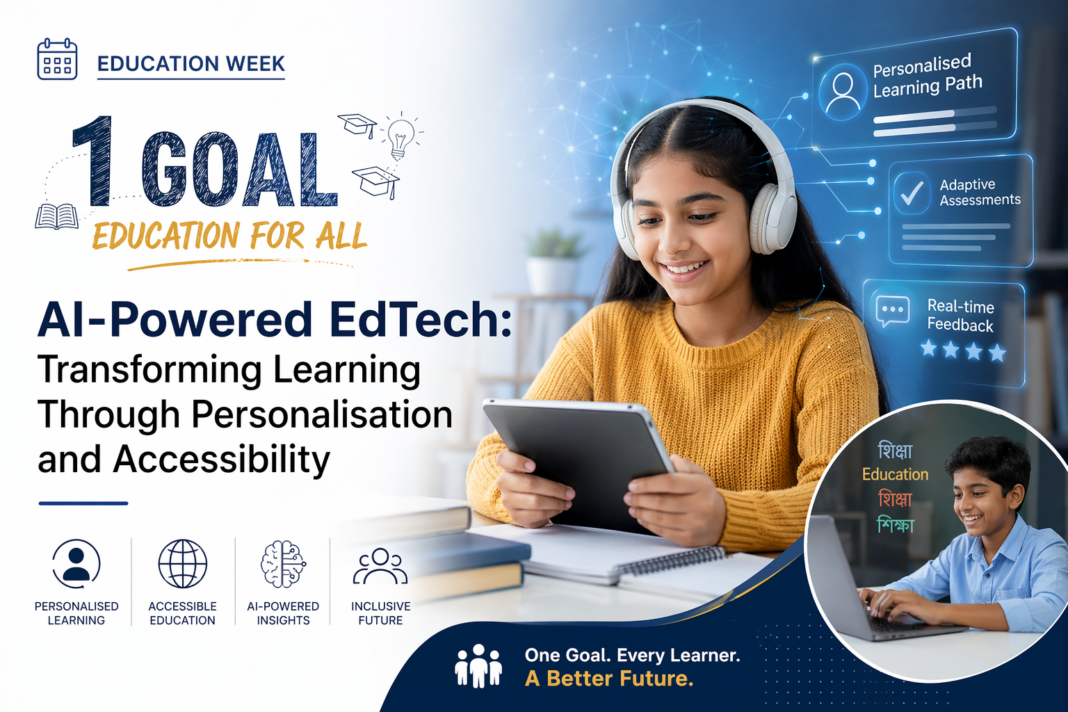

Edtech companies are rapidly adopting Artificial Intelligence (AI) to reshape learning, shifting from traditional one-size-fits-all models to more personalised and adaptive education experiences.
With AI becoming deeply integrated into their platforms, players like Physics Wallah and Coursera are redefining how students interact with content. These platforms use AI-driven tools to tailor learning materials based on individual performance, helping identify each learner’s strengths, weaknesses, and preferred study patterns.
AI-powered systems now support features such as customised video lessons, adaptive assessments, and real-time feedback. Intelligent tutoring systems can analyse vast volumes of student queries, suggest precise solutions, and generate practice questions aligned with a learner’s progress. This not only improves understanding but also ensures targeted academic support.
The impact is especially meaningful in a diverse country like India, where learners come from varied educational and linguistic backgrounds. AI helps bridge these gaps through regional language support and flexible learning pace, making quality education more inclusive and accessible.
At the same time, experts emphasise that AI is not a replacement for traditional teaching. Educators remain central to the learning journey, providing mentorship and critical thinking guidance, while AI enhances scalability and efficiency. Together, human expertise and machine intelligence are creating a more balanced and effective learning ecosystem.
As edtech continues to evolve, AI is set to play a defining role in the future of education—driving personalisation