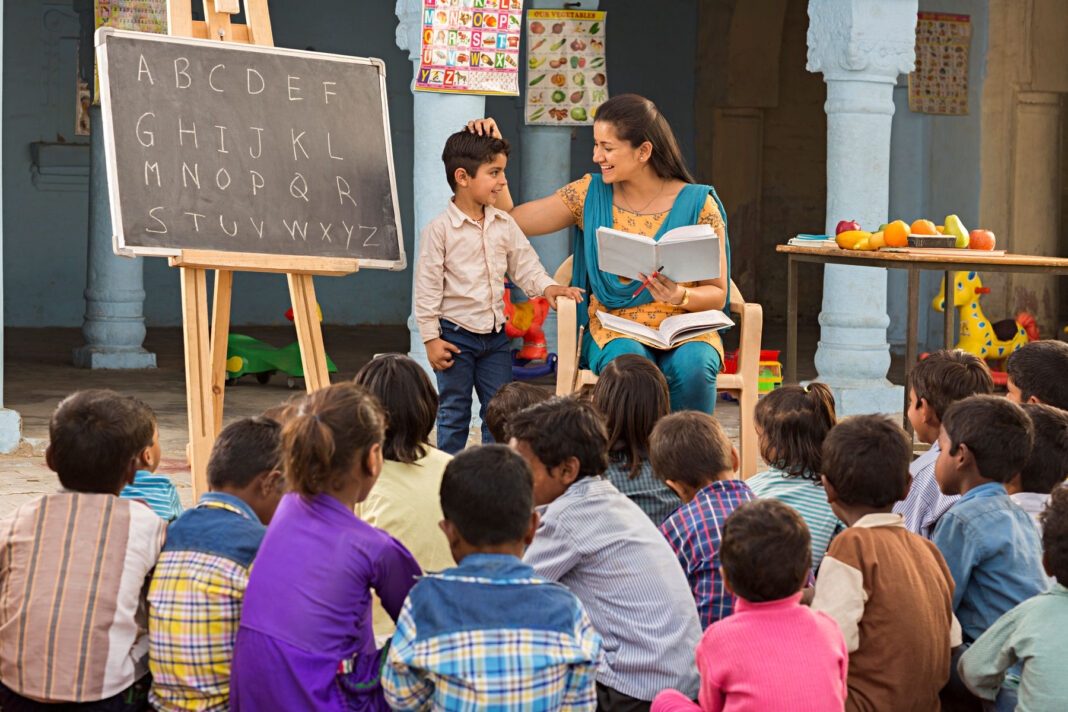

India’s education system, one of the largest in the world, is at a critical crossroads. While the country has made remarkable progress in expanding access to schooling, it continues to struggle with a fundamental challenge—the shortage of qualified school teachers. This issue is not merely about numbers; it is deeply connected to the quality of education, equity in learning, and the future of India’s human capital.
Introduction: A Paradox in Indian Education
India today has over 1 crore (10 million) school teachers, reflecting significant expansion in the education sector over the past decade.
However, despite this large workforce, the country faces a serious shortage of teachers, especially in government schools. Estimates suggest that over 3.57 lakh teaching posts are vacant, with even higher figures when considering long-term structural shortages.
Some analyses indicate that the overall shortage could exceed 10 lakh teachers, particularly at the elementary level.
This creates a paradox:
👉 India has a large number of teachers, yet not enough where they are most needed.
Understanding the Magnitude of the Problem
The shortage of teachers in India is both quantitative and qualitative:
1. Vacant Teaching Positions
Thousands of sanctioned posts remain unfilled for years due to delays in recruitment. In many states, vacancy rates remain high, affecting school functioning.
2. Single-Teacher Schools
Over 1 lakh schools in India operate with only one teacher, who is responsible for teaching multiple grades and subjects simultaneously.
3. High Pupil-Teacher Ratio (PTR)
Although the national PTR has improved to around 24 students per teacher, several states exceed the recommended limits, particularly at higher secondary levels.
4. Regional Disparities
States like Uttar Pradesh, Bihar, Jharkhand, and Rajasthan face more severe shortages compared to southern and western states.
Root Causes of Teacher Shortage
1. Inefficient Recruitment Systems
One of the biggest reasons behind teacher shortages is the delay and irregularity in recruitment processes. Exams, results, and appointments often take years, leaving positions vacant.
2. Rural-Urban Divide
Teachers prefer urban postings due to:
- Better infrastructure
- Quality of life
- Educational facilities for their own children
As a result, rural and remote schools face chronic shortages.
3. Poor Working Conditions
Many government schools lack:
- Basic infrastructure
- Teaching resources
- Accommodation for teachers
These factors discourage qualified candidates from joining or continuing in the profession.
4. Lack of Subject-Specific Teachers
There is a significant shortage of teachers for key subjects such as:
- Mathematics
- Science
- English
This affects learning outcomes, especially at secondary and higher secondary levels.
5. Dependence on Contractual Teachers
India has a large number of ad-hoc or contract teachers, often paid lower salaries and lacking job security. This leads to:
- Low motivation
- High attrition rates
6. Administrative Mismanagement
In many cases, teachers are:
- Assigned non-teaching duties
- Deployed improperly across schools
Recent reports highlight that even where teachers exist, misallocation leads to artificial shortages.
Impact on the Education System
1. Declining Learning Outcomes
When teachers are overburdened, students receive less individual attention, leading to poor academic performance.
2. Multi-Grade Teaching
In single-teacher schools, one teacher handles multiple classes at once, compromising teaching quality.
3. Increased Dropout Rates
Lack of teachers reduces student engagement, especially in rural areas, leading to higher dropout rates.
4. Inequality in Education
Private schools, with better staffing, offer higher quality education, while government schools lag behind—widening the education gap.
5. Weak Foundation for Skill Development
Poor school education directly affects:
- Employability
- Higher education outcomes
- Economic productivity
Recent Developments and Ground Realities
Recent audits and reports from states highlight the severity of the issue:
- In some regions, over 50–60% of teaching posts remain vacant in certain categories, severely affecting classroom teaching.
- States like Haryana and Rajasthan have had to consider contractual hiring or deputation to temporarily address shortages.
- In Uttar Pradesh, vacancies remain significant across elementary and secondary levels.
These developments show that the shortage is not just persistent—it is systemic and widespread.
Government Initiatives and Policy Response
1. National Education Policy (NEP) 2020
NEP 2020 emphasizes:
- Teacher training
- Merit-based recruitment
- Improving teacher status
2. Samagra Shiksha Abhiyan
A flagship program aimed at:
- Filling vacancies
- Improving infrastructure
- Enhancing teacher training
3. UDISE+ Data Monitoring
The government uses real-time data to:
- Track teacher availability
- Improve planning and allocation
Despite these efforts, implementation gaps remain a major challenge.
Solutions: The Way Forward
1. Regular and Transparent Recruitment
States must ensure:
- Timely exams
- Fast-track appointments
- Transparent processes
2. Incentives for Rural Posting
Providing:
- Higher salaries
- Housing facilities
- Career incentives
can encourage teachers to work in remote areas.
3. Teacher Training and Professional Development
Continuous training programs can improve both:
- Teaching quality
- Job satisfaction
4. Technology Integration
Digital tools and AI-based platforms can:
- Support teachers
- Reduce workload
- Enhance learning experiences
5. Better Teacher Distribution
Efficient transfer policies can ensure:
- Balanced teacher deployment
- Reduced regional disparities
6. Strengthening Accountability
Monitoring teacher attendance, performance, and deployment is essential for system efficiency.
Conclusion
The shortage of school teachers in India is not just an administrative issue—it is a national development challenge. While India has made progress in expanding its teaching workforce, the problem lies in distribution, quality, and governance.
If not addressed urgently, this crisis could undermine the country’s efforts to:
- Achieve universal education
- Build a skilled workforce
- Realize its demographic dividend
Ensuring that every classroom has a qualified and motivated teacher is essential for building a strong, inclusive, and future-ready India.